

Home/Guides/Why a door goes heavy
Guide · repairs
Why a garage door goes heavy
A garage door doesn't gain weight. A double sectional weighs what it weighed the day it went in. What changes is how much of that weight you feel, and that is entirely the story of the spring.
The door doesn't lift itself, the spring does
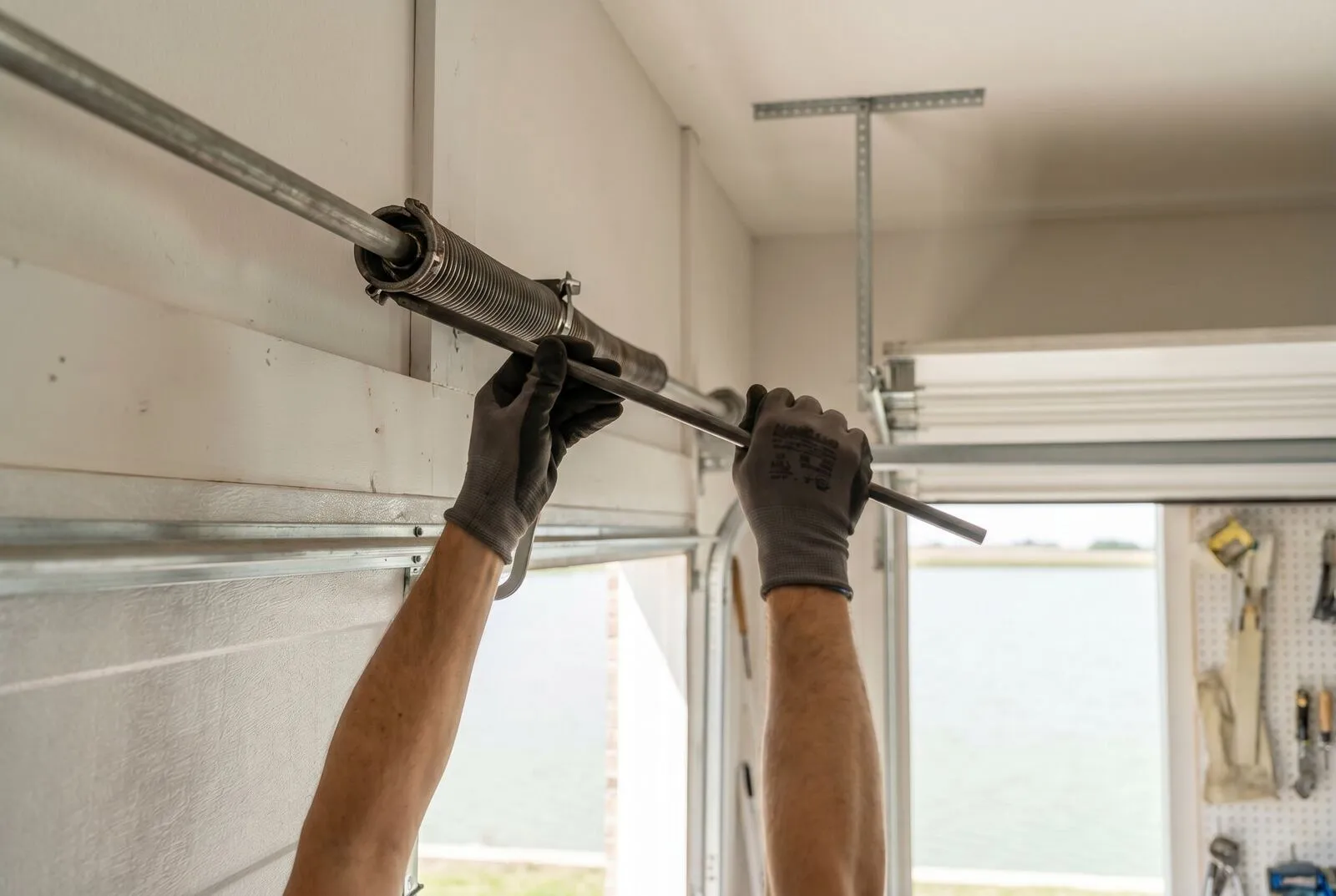
Every garage door hangs from a counterbalance. On most modern doors that's a torsion spring: a tightly wound coil on a steel shaft above the opening, wound to store almost exactly the door's weight. When the balance is right, the door floats. A person can lift a properly balanced double door with two fingers, and the opener, for all its motor, is really only steering.
Springs are rated for a finite number of open-and-close cycles, and every cycle spends one. Here on the Belmont foreshore, where the garage door is the working door of the house, doors rack up cycles faster than the same door would in a quiet street. Daily use is honest work, and the spring does all of it.
The half-open test
The simplest reading you can take yourself, on a door that moves by hand. Disconnect the opener if there is one (the red release cord), open the door about halfway, and let go.
- It stays put. The counterbalance is carrying its share. That's a balanced door.
- It creeps down. The spring has gone tired. The door works, but your shoulders and the opener are quietly paying the difference, and the wear compounds.
- It drops, or it's a dead weight. The spring is failing or has failed. Stop using the door and keep the opening clear.
If you heard one loud bang from the garage recently, you can usually skip the test. That bang is the sound a torsion spring makes when it lets go, and the door will confirm it by refusing to lift.
Why the opener hides it, then stops hiding it
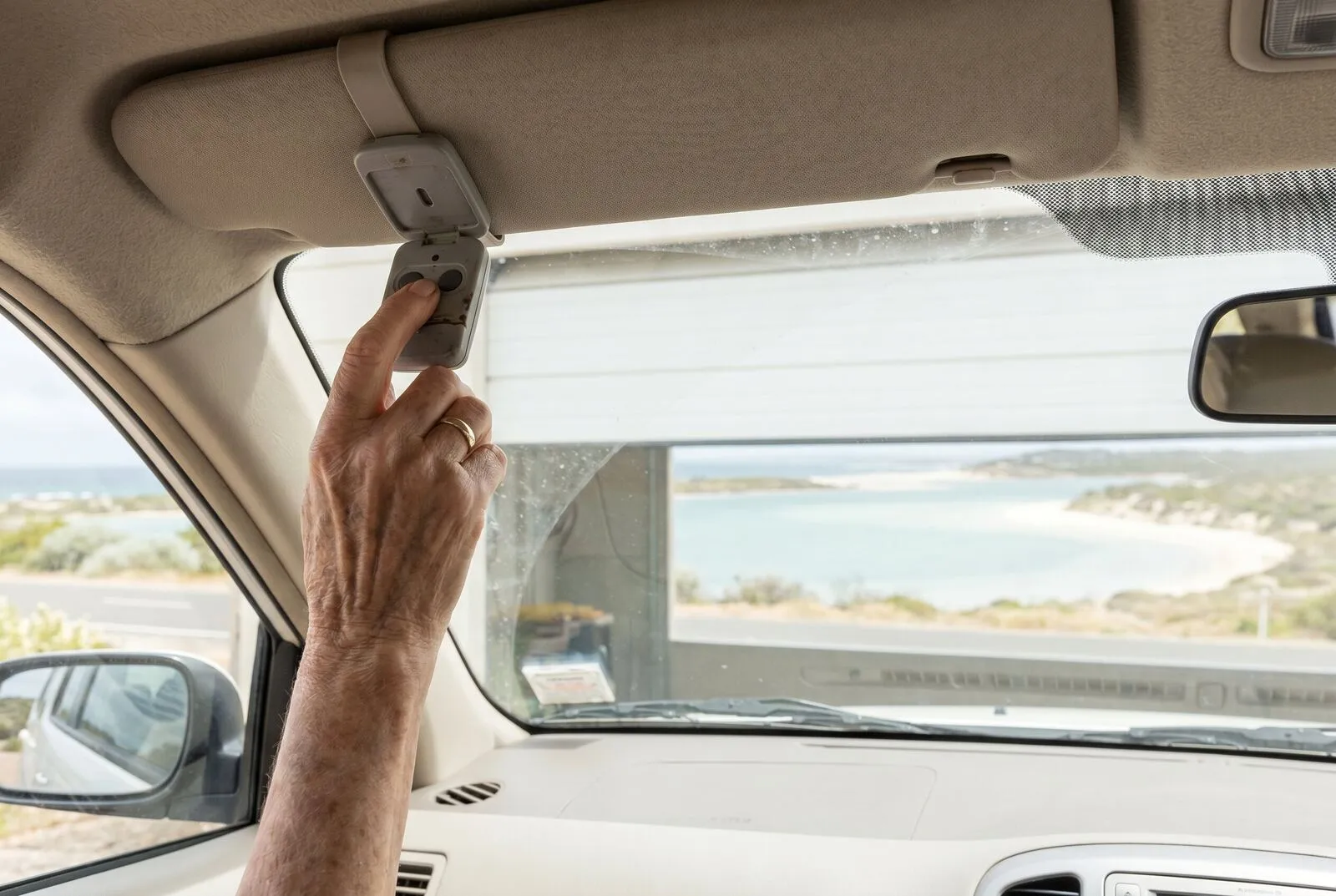
On an automatic door, you don't feel the weight, the motor does. A door drifting out of balance shows up as an opener that runs slower, sounds harder, or stops and reverses partway. Modern openers have a force limit for exactly this reason: when the door underneath asks for more force than a healthy door should, the opener gives up rather than push through, because pushing through is how doors and people get hurt. An opener that keeps tripping isn't being difficult. It's reporting.
The part you never touch
A wound torsion spring stores the weight of the door as twist in steel, held by set screws on a shaft. Released carelessly, it lets that force go in a fraction of a second. This is the one part of a garage door where the honest advice has no shades: don't unbolt anything near the spring shaft, don't back off the set screws, and don't trust a video that makes it look simple. Spring work is done with proper winding bars, by someone trained to it, with the door secured. In our trade it's routine. Done any other way, it's an emergency-room story.
Automatic openers carry their own safety rules for the same reason. In Australia, powered garage door openers are covered by an electrical-safety standard (AS/NZS 60335.2.95) that requires protections like auto-reverse, and the ACCC's Product Safety recalls list for garage door openers is worth a check if you've inherited an old unit with the house.
What a repair visit actually looks like
Plainly: we look at the whole system, not just the loudest part. Spring condition and balance, cables and their drums, rollers, track alignment, and the opener's force and travel settings. You get told what's actually going on in plain words, and a firm price for the work before anything is done. Most balance jobs are finished in a single visit.
If you want a first read before anyone comes out, the four-question check on our home page will name the likely culprit from what the door is doing.
Sources worth knowing
- ACCC Product Safety, garage door opener recalls. The national recalls register; the place to check an older opener that came with the house.
- Standards Australia, AS/NZS 60335.2.95. The safety standard covering powered residential garage door drives, including the auto-reverse behaviour described above. The standard itself is paywalled; this is its catalogue record.