

Home/Guides/Replacing a tilt door
Guide · new doors
Replacing an original tilt door
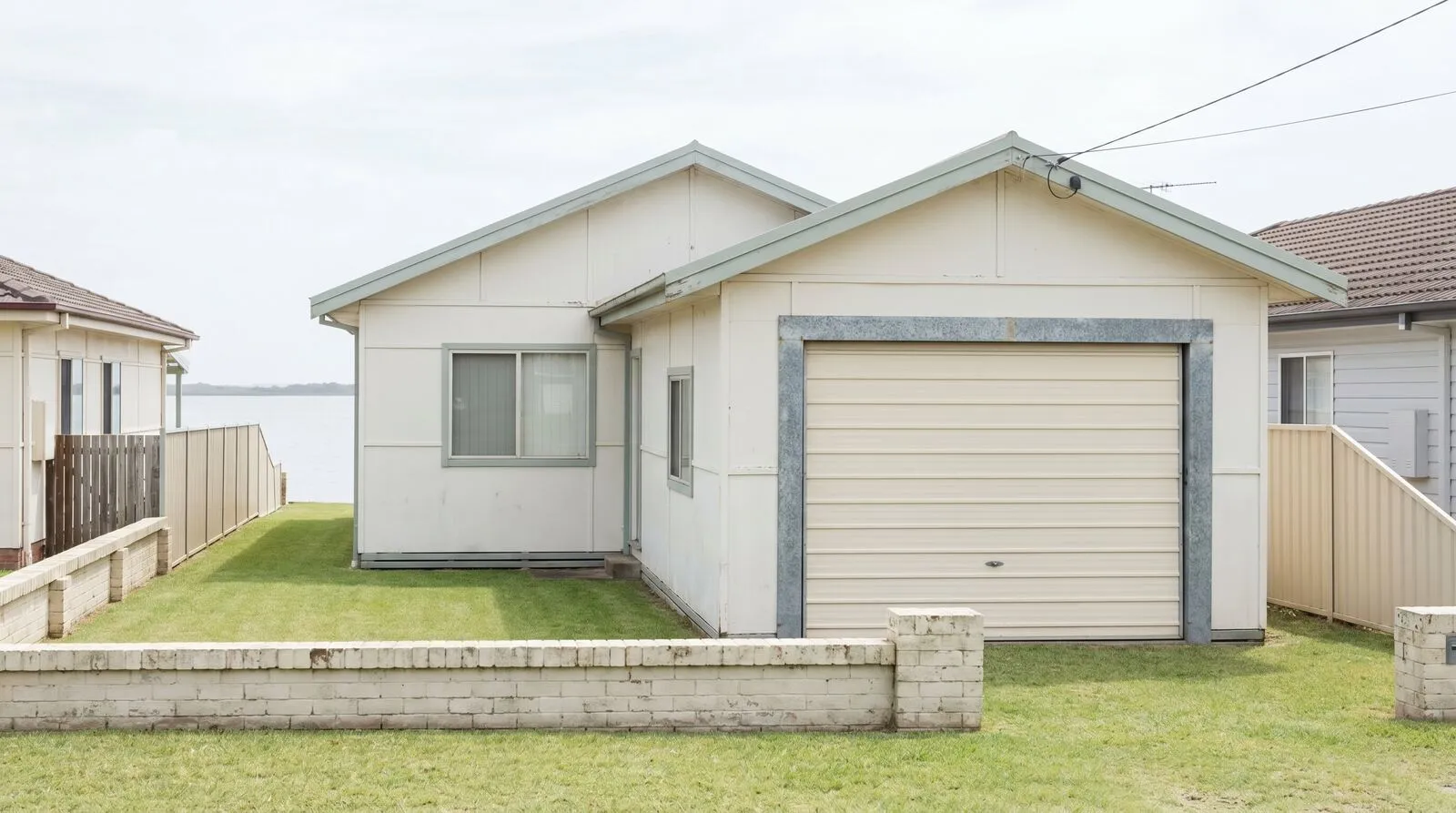
Belmont's older streets are full of them: the single-piece door that swings up and out in one motion, hung the year the house was built and still going. Tilt doors were the standard fit before the 1990s, and the good ones have earned their retirement honestly. This is the guide for when yours starts asking for it.
Repair or replace, honestly
Not every tired tilt door needs replacing, and we'll say so when it doesn't. Pivots can be rebuilt, springs replaced, balance reset. A tilt door has fewer moving parts than anything that's replaced it, which is part of why so many are still swinging.
The replacement conversation starts when the frame itself has rusted or sagged, when the panel has warped enough that it binds in the opening, or when the parts have simply outlived their makers. It also starts, fairly, when the door's habits stop suiting the household: a tilt door swings outward as it opens, which means a car parked close gets touched, and a short driveway loses usable length every time the door moves.
What the opening wants next
The honest answer depends on the garage, which is why we measure before we recommend. Two facts do most of the deciding:
- A sectional door (hinged panels rising back along ceiling tracks) is the modern default, seals well, and comes in insulated panels that make a real difference to a west-facing garage. In standard form it wants roughly 300 to 400 mm of headroom above the opening.
- A roller door coils into a drum above the opening and asks the least of the building, roughly 200 to 250 mm of headroom. Older garages with low ceilings, common in tilt-door houses, often suit one better.
Neither swings outward, which by itself changes how a short driveway works. Beyond type, the choices are practical rather than mysterious: profile and colour to suit the house, insulation if the garage cops sun or shares a wall with living space, and whether an opener goes on at the same time (usually the cheapest moment to do it).
What a measure visit covers
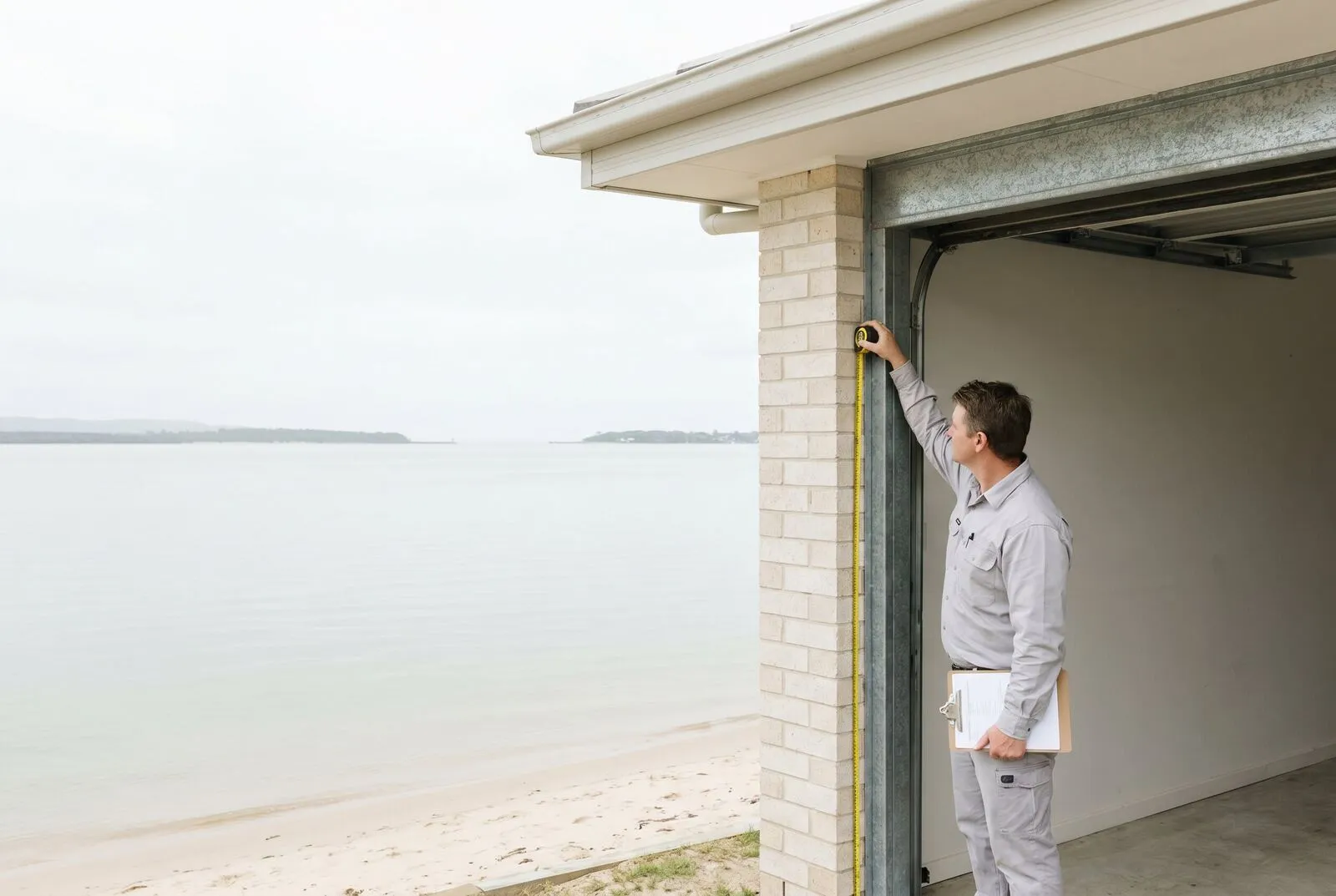
A quote is only as good as its measurements, so the visit is unhurried. We measure the clear opening width and height, the headroom, the side room where tracks and springs live, and we check the state of the jambs and lintel that the new door will hang from. If something about the opening needs attention before a door goes in, you hear it then, not on installation day.
Then the quote: a real figure for your opening and your choices, explained line by line, with nothing that moves after you've said yes. What drives it up or down is no secret. Size, door type, insulation, the opener, and any work the opening itself needs. We don't publish prices because those five things genuinely change the answer, but the model never changes: measure first, firm figure, then you decide in your own time.
A word on the old door's last weeks
A tilt door at the end of its life usually goes heavy rather than failing outright, and the temptation is to muscle it through one more season. Be a little careful with that. The springs on older tilt doors, often the stretched extension type, are still storing real force, and a corroded pivot can let go without ceremony. If the door has started dropping, slamming, or jamming partway, treat it as done and have it looked at rather than wrestling it daily.